Gardening the oceans

Though they cover less than one percent of the ocean floor, coral reefs are the vibrant, pulsing heart of our oceans, sustaining a staggering quarter of all marine life. They are nature’s ultimate sanctuaries - bustling underwater cities where countles species find refuge, raise their young, and feed, transforming otherwise barren seascapes into the most biodiverse environments on Earth. Most of these spectacular ecosystems thrive in warm, shallow tropical waters, with more than one-third of the world's coral reefs located within the territories of Australia, Indonesia, and the Philippines. However, their importance stretches far beyond their underwater beauty and marine biodiversity. For human populations, coral reefs act as a vital economic lifeline and a physical shield; they generate billions of dollars globally through tourism and sustainable fisheries, supporting the livelihoods of over a billion people. Furthermore, their massive limestone structures function as natural breakwaters, absorbing up to 97% of wave energy to protect coastal cities from erosion, flooding, and the full wrath of tropical storms.
_edited.jpg)

Because corals are highly sensitive to temperature changes, rising sea temperatures are causing massive coral loss, which directly threatens global marine biodiversity as a whole.
Corals are cnidarians that live in a strict symbiotic relationship with a type of algae called zooxanthellae. This relationship functions as a mutual exchange: algae provide the corals with vital oxygen and sugars through photosynthesis and corals provide the algae with a protected habitat and carbon dioxide for survival. When sea temperatures rise, corals experience thermal stress and expel the algae from their tissues. Without this symbiotic partner, the corals lose their vibrant colors and become "bleached." While they can survive in this bleached state for a short period, they eventually starve and slowly die if temperatures do not lower.

There are around 6000 species of corals globally. Primarily, they are divided into soft and hard corals, the latter ones building reefs. It is evaluated that there are over 1700 species of hard corals, that extract calcium from seawater to form limestone skeletons, which over time create the framework of coral reefs.
Although the term 'coral reef' instantly brings to mind shallow, warm tropical waters, more than half of all coral species worldwide actually live in the deep, cold, and pitch-black ocean at depths of up to 6000 meters. These deep-sea species do not require any sunlight to survive.
.jpg)
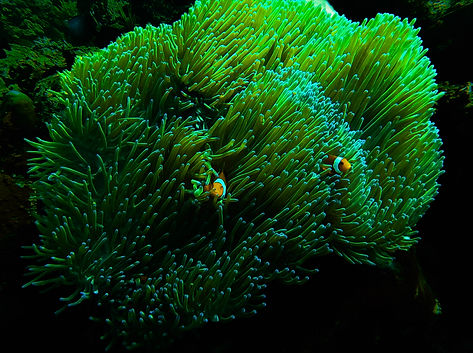


_edited.jpg)
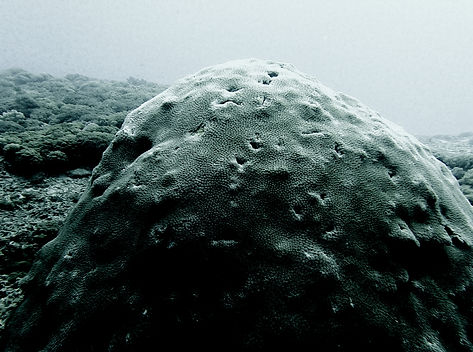_edited.jpg)
In the last few decades, due to rate of the loss of coral reefs, several organisations started planting corals back into the ocean. This became a global network of non-profits and scientific organizations, fighting reef collapse by cultivating coral nurseries and manually outplanting resilient fragments onto the ocean floor.
Process od coral restoration is the process of actively rebuilding degraded coral reefs using human intervention. Rather than waiting for slow natural recovery, scientists and conservationists use several techniques to grow and replant corals.
Instead of protecting what remains, they actively rebuild damaged reefs using underwater farming techniques. It is actually gardening - the process includes setting structures, "planting" the corals and then maintaineng them and surveille their growth. These activities include active reef restoration, education, and community engagement to rescue dying coral reef ecosystems.
There are several techniques for reef restoration.
Coral gardening includes conservationists collecting small fragments from healthy corals and growing them in sheltered ocean or land-based nurseries. Second, once the corals mature, they are transplanted - or "outplanted" - back onto degraded reefs to help restore the ecosystem.
A technique for certain species is known as micro-fragmentation, which leverages the natural regenerative abilities of corals. In specialized marine laboratories, healthy coral colony are fragmented into tiny fragments. This process intentionally triggers a healing response within the coral's tissue. This stimulation causes the tiny coral fragments to grow at an extraordinary rate, often up to 25 times faster than they would under normal conditions in the wild. Once the initial cutting is complete, these vulnerable fragments enter the nursery phase where they are carefully monitored and sheltered. Young corals are either nurtured in controlled land-based aquaculture tanks with regulated water flow or transported directly into the ocean to be secured onto floating offshore structures, such as underwater plastic structures or long, suspended rope networks. Over the course of 6 to 12 months, the corals receive constant maintenance from divers who clean away competitive algae and pests. After reaching a robust, resilient size, the mature colonies are ready for their final journey. Divers carefully transport them to degraded reef zones and permanently secure them back onto the natural reef skeleton using specialized materials.

_edited_edited.jpg)


Just like terrestrial plants, corals face natural predators that graze on them, including specialized marine snails and sea stars. In a healthy ocean, this grazing is balanced. However, rising sea temperatures driven by climate change put corals under immense biological stress, leaving them weak and highly vulnerable. Predators quickly target these compromised corals, multiplying the damage. Much like pulling weeds or removing pests from a backyard flowerbed, these divers are responsible for manually cleaning away intruders and choking algae to give the corals a fighting chance.
This practice has sparked a global movement, with hundreds of coral gardens actively cultivated across the ocean floor today. What started as localized, grassroots trials has evolved into a sophisticated global network of underwater agriculturalists determined to rewrite the future of our oceans. Across the Pacific, the Caribbean, and the Indian Ocean, specialized diving teams are scaling up these restoration efforts to an industrial degree. They are no longer just tending to individual patches of reef; they are rebuilding entire marine sanctuaries from scratch.

