Overlooked small treasures
For a long time, it was believed that commercial fisheries primarily harmed fish and other large marine animals through incidental bycatch. However, smaller creatures have largely been overlooked. Recent studies reveal that when these small benthic organisms are factored in, the total biomass hauled from the ocean onto boats can be several times higher than expected. Despite this, very few studies investigate these small organisms, which are brought aboard daily and rarely survive.


Spider crab (Maja sp.)
Smooth venus clam (Calista chione)
Despite their small dimensions and non-charismatic status, small organisms on the sea bed (so-called benthic organisms) play an important role in marine ecosystems. They live on, in, or near the seabed, ranging from shallow coastal waters to the deepest ocean trenches, and play a crucial role in nutrient cycling and maintaining the stability of the entire marine ecosystem.
One such ecosystem service is bioturbation, the process by which marine organisms continuously mix seafloor sediments through burrowing, moving, and feeding, which introduces oxygen into deeper layers. Bioturbation also helps decompose organic matter that sinks to the seafloor, preventing toxic waste buildup and maintaining a healthy marine environment. Benthic species are also the primary engines behind the water filtration process, as organisms like clams, mussels, sponges, and polychaete worms act as natural biological pumps that take organic particles and excess nutrients directly from the water column. By consuming these suspended materials and trapping sediments on the seafloor, they prevent algal blooms and significantly increase water clarity.
Consequently, their removal or destruction from ecosystems can have detrimental ecological consequences. One such activity that promotes this is intensive fishing on the bottom of the sea. Many fishing gears, targeting certain fish species, are not selective and cause broad destruction of benthic habitats.
Below, there are some species, often being taken from the seabed, incidentally together with some other target species:

Scattered biomass of organisms when fishing nets are brought onboard.
This is what it looks like when a net is brought onboard. Almost all of these, with the exception of a few rocks, are living organisms – mostly sponges, ophiuroids, and tunicates. After being brought to the vessel, they are left onboard until the nets are cleaned, which can take several hours before they are discarded back into the ocean.

Organisms left entangeled in the nets after retreiving them from the sea.
Some fishermen refer to this portion of the catch as 'trash.' Many of these organisms, particularly crabs and bivalves, are crushed during the net-cleaning process because they are difficult to disentangle and removing them individually is too time-consuming. Furthermore, official fishery regulations do not require this bycatch to be reported, allowing the true scale of the damage to remain hidden.
Who would have thought there so many that interesting creatures living on the bottom of the so called dull bottom?


Clams Hiatella sp.
Mediterranean nut crab (Ilia nucleus)

Egg cochles (Laevicardium oblongum)

Porcelain crab (Pisidia sp.)

Eggs of purple dye murex (Bolinus brandaris)

Spider crab (Inachus sp.)

Stalkeye porter crab (Ethusa mascarone)

Porcelain crab (Pisidia sp.)

Claws of the spider crab (Maja sp.)
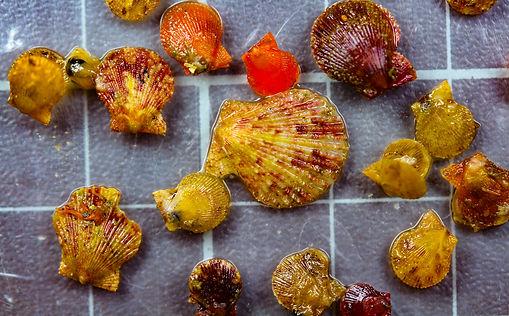
Young scallops (Pectinidae)

Hairy crab (Pilumnus sp.)

Pinna pea crab (Nepinnotheres pinnotheres) found in the white sea squirt (Phallusia mammilata)


Isopods (Isopoda)
Bearded ark shell (Barbatia barbata)

Purple sea urchin (Paracentrotus lividus)

Spiny brittle star (Ophiotrix sp.)
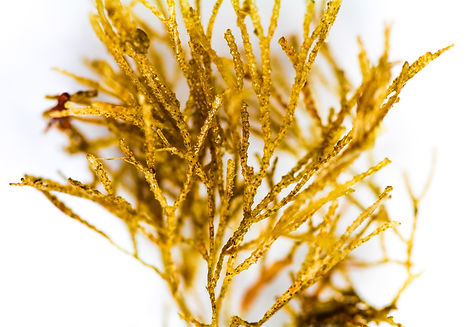
Collonial bryozoan

Blainville's muricop (Muricopsis cristata)

Shell of the purple sea urchin (Paracentrotus lividus)

Stalkeye sumo crab (Ethusa mascarone)

Banded venus (Polititapes rhomboides)

Sponge shrimp (Typton spongicola)

Pilgrim's scallop (Pecten jacobaeus)