Modern shark fishing

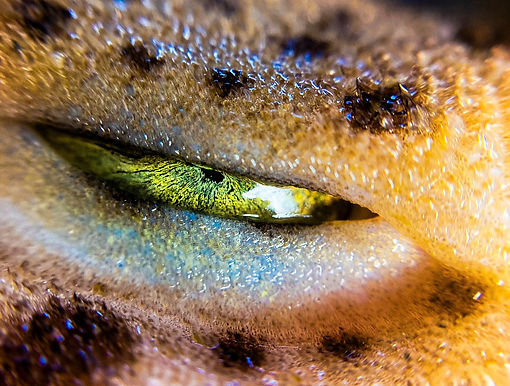
Eye of the smooth-hound (Mustelus sp.)
Many people do not know, but sharks are still being fished commerecially in many places, including Europe, which is strange since they are threatened and their populations proved to be in decline. Commercial fishermen still catch them legaly, even though their populations in some areas have declined for more than 90 %.
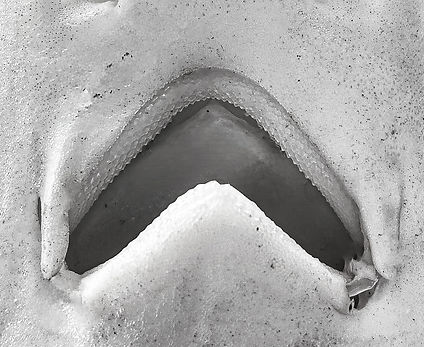
One such case is the Adriatic sea, where populaction have declined drastically due to overfishing. Two of the most common species are the common smooth-hound (Mustelus mustelus) and its close relative, the black-spotted smooth-hound (M. punctulatus). They are both smaller species of sharks, growing to under 200 cm in length, occuring on depths from 5 meters. They feature a sleek, grey or brown body, often adorned with light or dark spots. The scientific name Mustelus literally translates from Latin meaning"weasel". This name was given to them because of their slender, elongated bodies and their swift, flexible movements along the seafloor. They get their common name from their smooth, crushing dental plates rather than sharp, serrated teeth. Their teeth are tiny, flat, and arranged like pavement stones. This tooth structure makes them highly specialized predators. Because of their specialized dentition, their diet consists almost entirely of bottom-dwelling invertebrates. They primarily hunt crabs, lobsters, shrimp, hermit crabs, and occasionally small fish or marine worms. Smooth-hounds are completely harmless to humans due to their small size and crushing teeth. They spend most of their time patrolling the seafloor, using their keen sense of smell and electroreceptors to detect prey hiding in the mud or sand. They earned their other part of the common name "hound" because they are highly social and hunt in massive, coordinated packs along the seabed. When a school of smooth-hounds descends on a crab population, they act like a pack of hunting dogs sweeping a field.


Eye and the skin of the smooth-hound (Mustelus sp.).
Dental plates of the smooth-hounds.
Unlike apex predators like the great white sharks, they are specialized mesopredators that play a critical, stabilizing role in coastal marine ecosystems. They are highly vulnerable to commercial fishing pressure due to their shallow coastal habitats. Even though theire populations have declined severely, they are still being legaly caught and sold. In a single fishing net, there can be over hundred kilograms of smooth-hound caught, a catch from just a single day.
Because smooth-hounds lack the fierce reputation of great whites or hammerheads, their steep population declines often fly under the radar of public conservation campaigns. They are frequently swept up in massive quantities by bottom trawlers, heavy fishing nets dragged right across the seabed where these packs hunt and rest. Over the course of the 20th century, smooth-hound populations in the Mediterranean collapsed by an estimated 80% to 90%.
When a single boat lands hundreds of kilograms of smooth-hounds in a single day, it can wipe out an entire local subpopulation. Because they travel in dense, coordinated schools (like a pack of hounds), an entire group can be scooped up in a single trawl pass. They have nowhere to hide.
Smooth-hounds take several years to reach sexual maturity, and their pregnancies last nearly a year (11 to 12 months) only to produce a relatively small litter of pups. A population cannot bounce back quickly when an entire generation is caught overnight. A major reason they are still legally caught and sold in high volumes is marketing. In many parts of the world, consumers eat smooth-hound without ever realizing they are eating shark. In Mediterranean markets, it is frequently sold as "Palombo" or "Galeos."
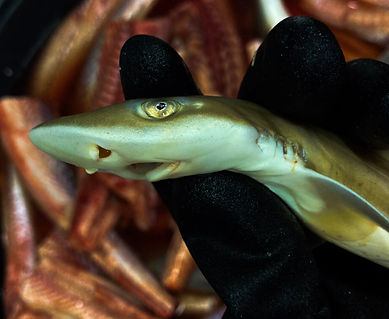
Catch of the juvenile smooth-hounds (Mustelus sp.)

Juvenile smooth-hounds, caught in the demersal nets in the North Adriatic.


When a mesopredator like the smooth-hound is hollowed out of an ecosystem, it triggers a destructive biological chain reaction known as a trophic cascade. Smooth-hounds are the primary security guard keeping bottom-dwelling crab populations in check. Without these sharks patrolling the shallows, crab numbers explode. Smooth-hounds are the primary security guard keeping bottom-dwelling crab populations in check. Without these sharks patrolling the shallows, crab numbers explode. An overpopulation of crabs leads to intense overgrazing on seagrass beds and the consumption of billions of tiny juvenile bivalves (clams, oysters, and scallops). This completely tears apart the underwater "nursery" habitats that commercial fish species rely on to lay their eggs, effectively destroying the long-term health of the very fisheries that caught the sharks in the first place.
Because smooth-hounds are not legally protected under strict regional quotas like bluefin tuna, they are classified as "commercially exploitable." Even though organizations like the IUCN Shark Specialist Group have formally designated specific zones in the Adriatic as ISRAs (Important Shark and Ray Areas) due to their use as mating grounds and nurseries, these designations carry no binding legal weight to ban commercial bottom trawling. As a result, massive industrial fleets continue to legally drag nets straight through the sharks' primary birthing grounds.
The combination of Italy being the leading consumer of shark meat within the EU, the lack of binding protection for ISRAs, and the sharks' natural reluctance to repopulate empty territories ensures that without an immediate regional ban on landing immature specimens, recovery in the Adriatic is biologically impossible. [1, 2]
It was evaluated that populations of sharks in the Adriatic sea have decline for over 90 %. The common smooth-hound (M. mustelus), occuring in the Mediterranean sea and the east coast of the Atlantic ocean, is currently evaluated as Endangered (EN) and the black-spotted smooth-hound (M. punctulatus) as Vulnerable (VU) by the IUCN Redlist. Populations of both are marked as severly damaged.
Catch of the smoothounds (Mustelus sp.): adult (left) and juvenile (right).


Catch of juvenile (left) and adult (right) smooth-hounds.
There are many juveniles being caught that do not survive the stress. Because they are smaller, juveniles lack the physical resilience of adults, making them highly vulnerable to metabolic exhaustion, improper handling, and environmental changes during capture. And if a fish is caught before it has a chance to reproduce at least once, it cannot contribute to the next generation, which causes fish numbers to decline rapidly.
Another species occuring in the Adriatic sea, being fished, are catsharks, the Small-spotted catshark (Scyliorhincus canicula) and the Nursehound (S. stellaris). Those are caught mostly as bycatch, meaning they are caught unintentionally in the nets being set on the nottom on the seafloor. They are also species, livinig on the bottom of the sea. They are usually released back to the sea after being caught by the fishermen, since they are not primary target species, but still the survival of those individual is questionable, since stress of being brought onboard in many cases cause lethal or delayed sublethal effects, causing lower survival and reproduction rates of caught individuals.
In some cases, fishermen do not release the animals back to the sea right away, causing them to not get enough air to survive. In some cases, animals can also die in the nets underwater already due to different reasons.
Nursehound (Scyliorhinus stellaris)


Nursehound (Scyliorhinus stellaris)
Nursehound (Scyliorhinus stellaris)

Catching large amount of fish and loosing big part of populations is sadly not reversible. Animals have evolved for millions of years to environmental conditions and loosing big part of populations means loosing many genes that will, in a case of reestablishing populations, not be brought back. This means lower adaptation capacity to enivormental chanege and by that bigger vulnerability in the future, which is especially worrisome in the times of rapid climatic chanege. So we are losing something that can not be easily reestablshed. What is more alarming is that many fishermen are not aware of these facts and the consequences that they may have, even for the state of wellbeing of the fishing community. That is why proper education of fishemen is more than necessary.
When the caught animals are filleted onboard of the fishing vessels, the unused body parts are discarded back to the sea. Often, this is done when reaching marinas at the end of fishing activities, resulting in a lot of excess organic matter being thrown there overboard.
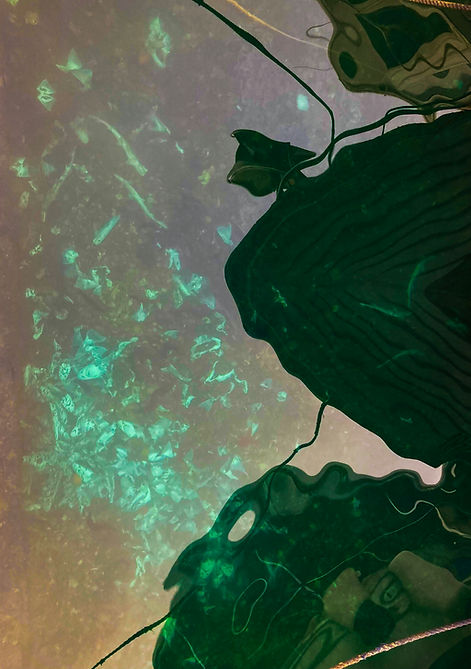
Discarded remains of the sharks.

References
-
IUCN Redlist: https://www.iucnredlist.org/ja/species/39358/124405881#geographic-range
-
Barrausse A., Correale V., Curkovic A., Finotto L., Riginella E., Visentin E. and Mazzoldi C. 2014. The role of fisheries and the environment in driving the decline of elasmobranchs in the northern Adriatic Sea, ICES Journal of Marine Science (71)7: 1593–1603. https://doi.org/10.1093/icesjms/fst222.
-
Ferretti F., Myers R. A., Serena F. and Lotze H. K. 2008. Loss of Large Predatory Sharks from the Mediterranean Sea. Conservation Biology, 22: 952-964. https://doi.org/10.1111/j.1523-1739.2008.00938.x
-
Fortuna, C. M., Vallini, C., Filidei, E., Ruffino, M., Consalvo, I., Di Muccio, S., … Mazzola, A. (2010). By-catch of cetaceans and other species of conservation concern during pair trawl fishing operations in the Adriatic Sea (Italy). Chemistry and Ecology, 26(sup1), 65–76. https://doi.org/10.1080/02757541003627662