Sustainable fish

The blue fish (Pomatomus saltatrix)
Unsustainable fisheries constitute the single greatest direct threat to marine life, systematically stripping our oceans of biological diversity far quicker than ecosystems can naturally regenerate. Data gathered by global conservation authorities proves that human demand has pushed global extraction way past safe biological limits.
According to the Food and Agriculture Organization (FAO), global fishing extraction claims roughly 92 million tons of wild sea creatures every single year.
As large, apex predatory fish (such as bluefin tuna, cod, and groupers) have faced catastrophic collapses due to intensive targeting, industrial fleets have traveled deeper, targeting younger, smaller, and lower-trophic species. This removes the fundamental forage base for the entire ocean. The share of globally assessed fish stocks pushed past their safe biological limits has tripled over the last half-century. Roughly 35% to 38% of all global marine fish stocks are actively overfished, while over 50% are being fished at maximum capacity.
Fish consumption has risen from 9.1 kg per capita in 1961 to 20.6 kg in 2021. Fish still remains one of the most important sources of protein in many areas of the world.
In 2026, human population has reached 8.3 billions of people.


European lobster (Homarus gammarus) and mixed catch.
Throughout human history, fisheries have evolved from localized, subsistence-based practices into a highly mechanized, globalized industry. In ancient times and early human civilizations, fishing was a rudimentary, small-scale endeavor reliant on simple tools such as hand-carved bone hooks, woven traps, and basic spears, limiting the catch to immediate coastal or riverine waters. As maritime technology advanced through the centuries, marked by the introduction of larger sailing vessels and more durable gear, communities expanded their reach, transitioning into commercial trade.
However, the true transformation occurred during the 20th century with the arrival of industrialization. The integration of diesel-powered trawlers, onboard refrigeration, flash-freezing technology, and advanced military-grade sonar and GPS tracking completely decoupled fishing from geographical and temporal limits. This shift from passive, artisanal gathering to aggressive, data-driven open-ocean extraction allowed fleets to target entire schools of fish with surgical precision. Today, modern fisheries have reached a peak of technological complexity, utilizing satellite data, automated longlines, and massive factory ships capable of processing thousands of tons of seafood at sea, creating an unprecedented ecological footprint that now requires complex international governance to manage.
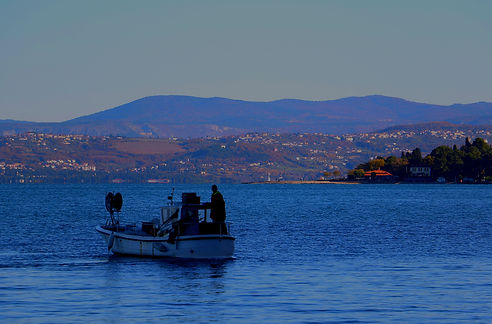
Small-scale coastal fisheries


The expansion of industrial fisheries into the open ocean has transformed the high seas into vast, automated extraction zones where marine life is harvested on an unprecedented scale. Armed with massive factory trawlers—some stretching the length of a football field—modern fleets venture thousands of miles from the coastline into international waters, completely bypassing traditional geographic limits. These vessels deploy hyper-efficient catching technologies, such as purse seine nets capable of enclosing entire schools of fish in a single haul, and pelagic longlines that stretch up to 80 miles long with thousands of baited hooks.
Guided by real-time satellite imagery, sea-surface temperature data, and advanced military-grade sonar, industrial fleets can locate and track migratory fish populations with surgical precision. Because these ships feature onboard flash-freezing facilities and automated processing factories, they can remain at sea for months at a time, continuously extracting and packing thousands of tons of fish before ever returning to port. This relentless, industrial-scale extraction depletes apex predators like tuna and swordfish, alters open-ocean ecosystems, and exerts immense ecological pressure on a global commons that lacks centralized policing.

Common pandora (Pagelus erythrinus)
Blue fish (Pomatomus saltatrix)

Skate's eye (Raja sp.)
Certain species have become exceptionally threatened and vulnerable due to their specific biological traits. While smaller, short-lived species can reproduce quickly and absorb heavy fishing pressure, long-lived animals with slow reproductive rates, such as apex sharks, rays, and deep-sea fish like the orange roughy, are being pushed to the brink of collapse. Because these vulnerable species require years or even decades to reach sexual maturity and produce very few offspring, their populations simply cannot keep pace with the relentless speed of modern commercial extraction. This historic shift from localized, artisanal fishing to a globalized techno-industry has transformed once-abundant marine predators into critically endangered symbols of an ocean in crisis.

For decades, cephalopods (such as squids, octopuses, and cuttlefishes) were widely celebrated as the ultimate ecological opportunists of the ocean—frequently dubbed the "weeds of the sea" due to their remarkably rapid growth rates, short lifespans, and fast reproductive cycles. Because of these adaptable traits, historical data from previous decades heavily suggested that cephalopod populations were booming worldwide, successfully exploiting the gaps left behind by overfished apex predators and adapting to warming ocean temperatures. In recent years, however, marine scientists and global tracking networks like the Food and Agriculture Organization (FAO) have acknowledged a troubling shift: this supposed "cephalopod empire" is showing clear signs of strain. Due to the compounded pressures of relentless industrial overfishing, escalating marine heatwaves, toxic algal blooms, and localized habitat degradation, global catch landings have noticeably slowed down and certain regional populations have faced unprecedented crashes. This shift has dispelled the myth of their complete invulnerability, proving that even the ocean's most rapidly renewing organisms have a tipping point when confronted with intense environmental and anthropogenic stress.
Common cuttlefish (Sepia officinalis)
For the first time in human history, aquaculture (fish farming) now produces more food for human consumption than traditional wild-capture fisheries. While fish farming is heavily promoted as a sustainable solution to protect wild marine life, it hides a massive catch. Carnivorous farmed favorites, like Atlantic salmon, sea bass, and tuna, cannot survive on soy or corn alone. They require high-protein fishmeal and fish oil made from wild-caught forage fish. Because of this, global industrial fleets catch roughly 15 to 20 million tons of wild sardines, anchovies, and mackerel every year just to grind them down into feed pellets for farmed fish, so there are more and less sustainable aquaculture practices aswell.

What can you do to choose more sustaninable fish?
Choose smaller fish:
It is more sustainable to choose smaller fish species, like sardines, anchovies, or mackerel. These species grow quickly, mature early, and reproduce rapidly, allowing their populations to regenerate faster than larger fish. Large apex predators, like tuna or swordfish grow slowly and have low reproductive rates. If overfished, their stocks take decades to recover. Simple arithmetic fails here - growing a single large fish requires significantly more time, energy, and resources than producing the exact same weight split across many smaller fish.
Aquaculture:
While fish farming (aquaculture) can relieve pressure on wild ocean stocks, it must be executed responsibly. Sustainable aquaculture focuses on smaller fish species, seaweeds, and key invertebrates like shrimp, crabs, and shellfish.
In fact, bivalves like oysters, mussels, and clams act as natural filters. They actively clean the surrounding seawater and improve local water quality without requiring any commercial feed inputs.
Watching eco-labelling:
When shopping, third-party certification labels are essential tools for identifying ocean-friendly products. These eco-labels guarantee that your seafood meets rigorous international standards. Look for certifications that focus on:
-
Sustainable fishing practices: ensuring wild fish are harvested without destroying populations.
-
Minimized environmental footprints: restricting pollution, protecting critical habitats, and preventing collateral damage to other marine life.
-
Responsible farming: ensuring aquaculture facilities operate without overuse of antibiotics, chemicals, or habitat destruction.
-
Social and economic footprints: protecting human rights and ensuring fair economic returns for local fishing communities.
Buy localy produced fish:
Purchasing local seafood supports small-scale, artisanal fishers and significantly reduces the carbon emissions associated with global transport. Small-scale local fisheries typically utilize selective, low-impact gear. This is drastically less destructive to fragile marine habitats and seafloor ecosystems when compared to industrial-scale deep-sea trawling fleets.
Here are some valuable resources to help choose more sustainable seafood based on the current state:
-https://www.mcsuk.org/goodfishguide/
-https://wwf.panda.org/act/live_green/out_shopping/seafood_guides/
-https://www.msc.org/what-you-can-do/eat-sustainable-seafood
.jpg)

Common pandora (Pagelus erythrinus)
Forkbeard (Phycis phycis)
References:
- Doubleday Z. A., Prowse T. A. A., Arkhipkin A., Pierce G. J., Semmens J., Steer M., Leporati S. C., Lourenço S., Quetglas A., Sauer W., Gillanders B. M. 2016. Global proliferation of cephalopods. Current Biology 26(10): R406-R407. ISSN 0960-9822.
- Genner M. J., Sims D. W., Southward A. J., Budd G. C., Masterson P., McHugh M., Rendle P., Southall E. J., Wearmouth V. J., Hawkins S. J. 2010. Body size-dependent responses of a marine fish assemblage to climate change and fishing over a century-long scale. Global Change Biology 16: 517-527. https://doi.org/10.1111/j.1365-2486.2009.02027.x
- Queiros Q., McKenzie D. J., Dutto G., Killen S., Saraux C., Schull Q. 2024. Fish shrinking, energy balance and climate change. Science of The Total Environment 906: 167310. ISSN 0048-9697.